Community-led mangrove restoration and marine conservation in Cebu.
Environmental degradation in the Philippines has resulted in severe loss of mangrove habitats and a growing burden of marine debris. These ecosystems protect shorelines, support fisheries, and sustain local livelihoods, but restoration efforts are often underfunded or difficult for local communities to sustain. Creating ways to incentivize meaningful participation in ecosystem restoration is critical for long-term impact.
The project has also experienced the realities of long-term coastal restoration. Severe typhoons in November 2025 caused storm surges, flooding, strong wave action, and debris accumulation that damaged several restoration sites. In addition, the project's original pathway to bring restored mangroves to market through Native Squared did not advance during the grant period because the platform entered hibernation and carbon-rights questions with local government remained unresolved.
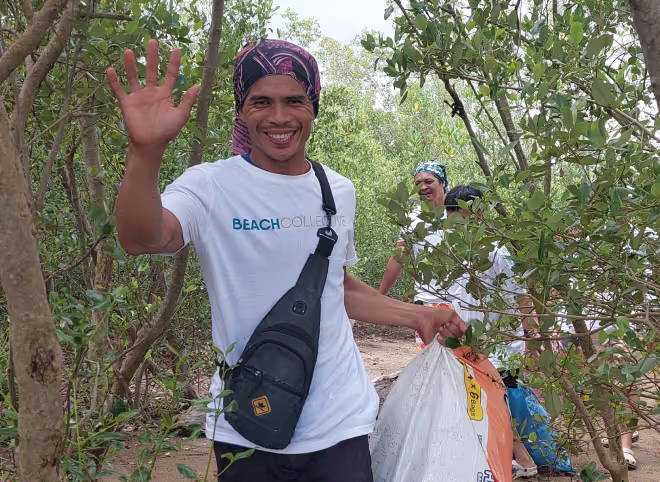
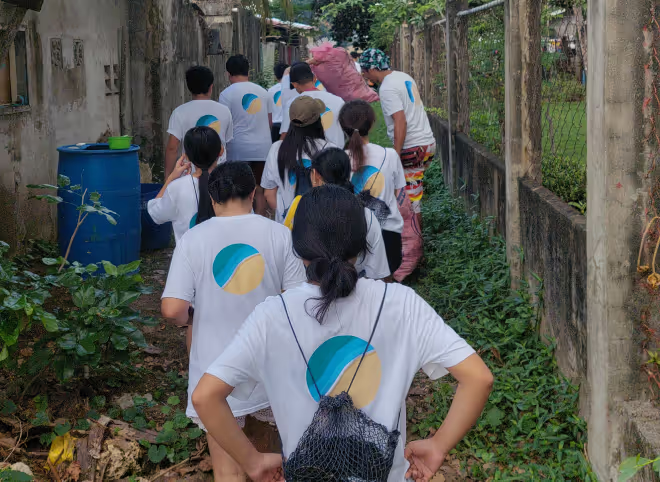
At the start of HCF's partnership, BeachToken used a blue circular economy model that rewarded local residents for mangrove restoration and marine debris removal with the $BEACH currency, which participating businesses could accept for goods and services. Although $BEACH is no longer active, the model helped demonstrate how conservation incentives could support both community participation and coastal restoration. Beach Collective's work has continued to combine ecological restoration with local economic opportunity, placing community members at the center of planting, cleanup, nursery, monitoring, and recovery efforts.
1. Mangrove Restoration: The 2023-2024 grant helped plant 2,000 mangrove seedlings and supported a local team responsible for maintaining and protecting restored areas. The 2025-2026 Catalytic Grant, supported in partnership with the Mary Gard Jameson Foundation and expanded through an addendum, broadened the work and helped bring the partnership's total to 13,500 seedlings while maintaining a mangrove nursery for future restoration.
2. Economic Support: The initial project created a full-time local job and supported four small businesses adopting the $BEACH currency. During the latest grant period, the project generated 359 paid labor days for 24 local community members through mangrove planting, cleanups, nursery work, and maintenance activities.
3. Waste Removal: The first phase removed one ton of marine debris. During the latest grant period, six community-led coastal and mangrove cleanup activities removed 3,493 kilograms, or nearly 3.5 tons, of waste.
4. Monitoring and Recovery: Beach Collective uses planting records, regular site visits, photographic documentation, nursery tracking, and visual assessments to monitor seedling growth and site conditions. Following the 2025 typhoons, the team assessed surviving areas, maintained nursery operations, and identified priority locations for recovery and future replanting.
During the 2023-2024 phase, BeachToken planted 2,000 mangrove seedlings, created a local job, engaged four small businesses in the $BEACH model, and incentivized community participation in mangrove restoration and marine debris removal.
Building on that foundation, HCF continued its support through a Catalytic Grant matched by the Mary Gard Jameson Foundation and later expanded through an addendum. After three years of partnership, Beach Collective completed its initial mangrove restoration program with the following cumulative results:
• 13,500 mangrove seedlings planted across the three-year partnership
• Approximately 4,000 square meters of coastal habitat restored
• 3,493 kilograms, or nearly 3.5 tons, of waste removed through community-led coastal and mangrove cleanups
• 359 paid community workdays created for 24 local community members
• An estimated 88% average seedling survival rate recorded before the November 2025 typhoons
• 10,000 seedlings planted in early 2026 remaining in good health, with continued nursery operations supporting future restoration
The November 2025 typhoons caused significant losses across several restoration sites, including a substantial portion of the 3,500 seedlings planted through the original March grant. Even so, portions of the restored area remain viable, and the nursery and 2026 plantings give the community a base for continued monitoring, recovery, and replanting.
The project did not reach the planned Native Squared market pathway during this grant period because the platform entered hibernation and carbon-rights questions remained unresolved. Even so, the work produced measurable results and strengthened local stewardship and restoration capacity in Cebu. By investing in people alongside ecosystems, the partnership has helped build the knowledge, capacity, and resilience needed to continue protecting and restoring these coastlines.


GET INVOLVED
We'd love to show you the work up close and find the best way for you to be part of it.